Free Shipping to Greece & Cyprus on all orders above €100 THE DEAL DROP IS LIVE · 25% OFF ONLY FOR TODAY · ALL FULL-SIZE PRODUCTS Free Shipping to Greece & Cyprus on all orders above €100 THE DEAL DROP IS LIVE · 25% OFF ONLY FOR TODAY · ALL FULL-SIZE PRODUCTS Free Shipping to Greece & Cyprus on all orders above €100 THE DEAL DROP IS LIVE · 25% OFF ONLY FOR TODAY · ALL FULL-SIZE PRODUCTS Free Shipping to Greece & Cyprus on all orders above €100
Free Shipping to Greece & Cyprus on all orders above €100 THE DEAL DROP IS LIVE · 25% OFF ONLY FOR TODAY · ALL FULL-SIZE PRODUCTS Free Shipping to Greece & Cyprus on all orders above €100 THE DEAL DROP IS LIVE · 25% OFF ONLY FOR TODAY · ALL FULL-SIZE PRODUCTS Free Shipping to Greece & Cyprus on all orders above €100 THE DEAL DROP IS LIVE · 25% OFF ONLY FOR TODAY · ALL FULL-SIZE PRODUCTS Free Shipping to Greece & Cyprus on all orders above €100
Gut Health, Emotional Eating & Insulin Resistance | Maria Pieri – Nutrinspired
How often do we hear that “everything starts in the gut”?
Can gut health really affect our mood? Why do we sometimes reach for food even when we are not physically hungry? What does insulin resistance actually mean, and why do we hear so much about it? And how closely are nutrition, exercise, stress and the way we think connected?
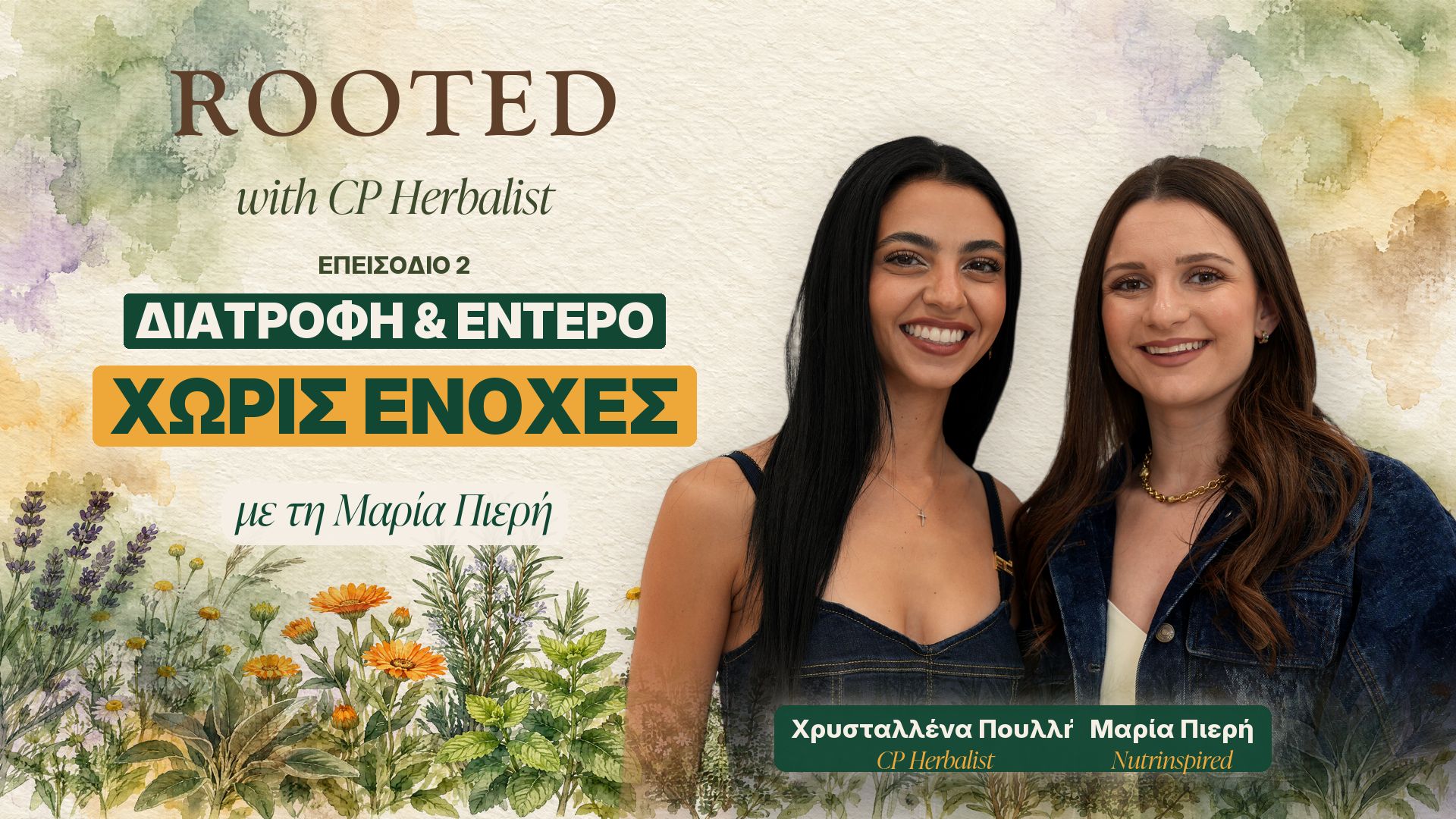
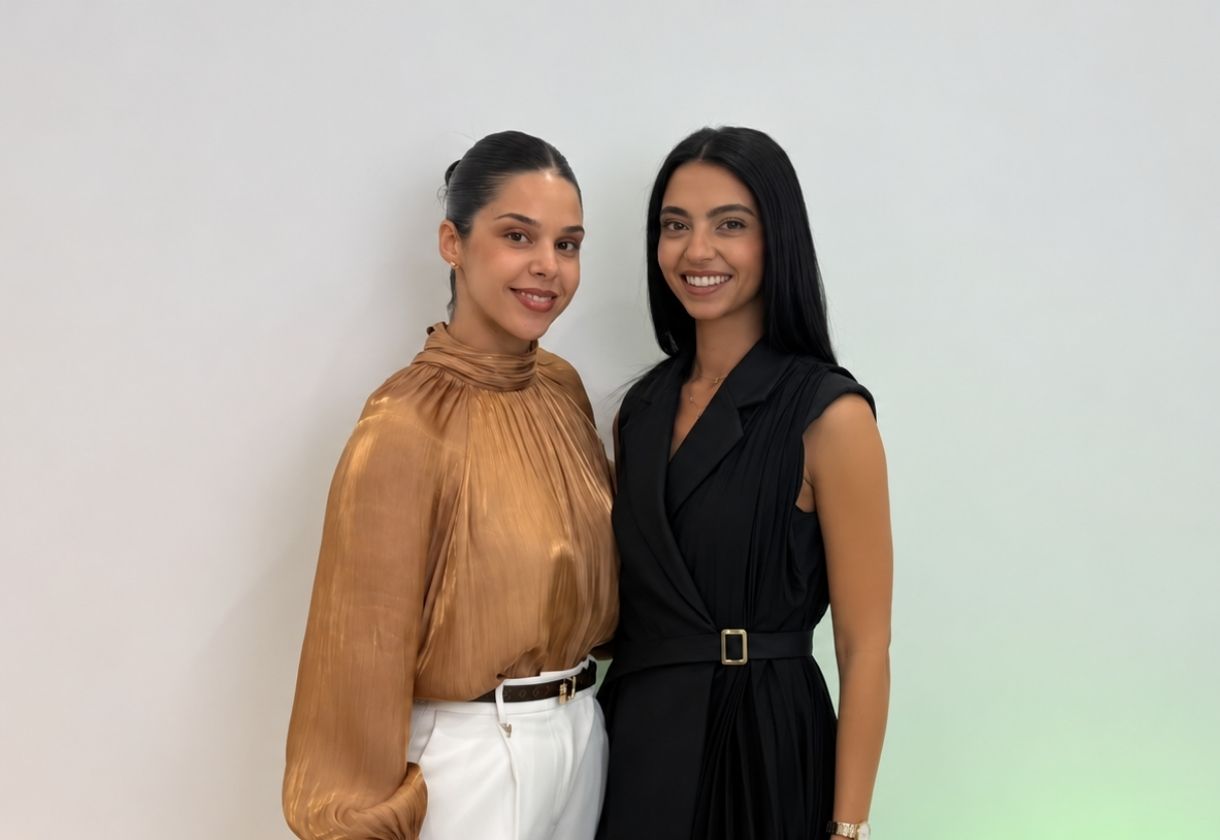
In this episode of the CP Herbalist podcast, Chrystallena Poulli welcomes Maria Pieri from Nutrinspired, Clinical Dietitian–Nutritionist specialising in obesity and weight management, for an open conversation about nutrition and the relationship we have with our bodies.
This time, many of the topics came directly from questions shared by our own community.
From gut health and emotional eating to insulin resistance and irritable bowel syndrome, our aim was to take the topics we hear about every day — especially on social media — and discuss them in the simplest and clearest way possible.
In this episode, you’ll learn:
How the gut and the brain are connected, and how stress can show up as gut symptoms
How to tell physical hunger apart from emotional eating
What insulin resistance really is, and whether craving sweets means you have it
Why there is no single diet for IBS, and the risk of cutting out whole food groups
How to break the “I’ll start again on Monday” cycle
25:04 Irritable bowel syndrome, bloating and reflux
Gut health: how much does it really affect the way we feel?
In recent years, gut health has been everywhere.
Probiotics, the microbiome, bloating, foods that are “good for the gut” and countless different tips appear on social media every day.
But what does it actually mean to have a healthy gut?
In our conversation with Maria Pieri, we discuss the connection between the gut and the brain and how our physical and emotional wellbeing can interact.
Can our gut affect our mood and everyday life?
And conversely, can intense stress or psychological pressure show up as bloating, changes in bowel habits or other gastrointestinal symptoms?
It is a relationship far more complex than we may realise.
Emotional eating: am I really hungry or do I need something else?
We have all found ourselves standing in front of the fridge without being completely sure whether we are actually hungry.
Maybe we had a difficult day.
Maybe we are bored.
Maybe we are stressed.
Or perhaps we have simply connected certain moments with food.
In the podcast, we discuss emotional eating and how we can begin to distinguish physical hunger from the need to use food for emotional comfort.
The goal is not to create even more guilt around food.
Quite the opposite.
It is about beginning to understand why we eat and what our body truly needs in that moment.
Insulin resistance: what does it really mean?
“Could I have insulin resistance?”
It is a question we hear more and more often.
But what is insulin resistance really? Are there signs we can notice? And can it affect weight management?
We also discuss one of the most common claims circulating on social media:
If I constantly crave sweets, does that mean I have insulin resistance?
And if someone has insulin resistance, does that mean they need to completely remove carbohydrates or sugar from their diet?
Maria helps us look at the bigger picture, beyond quick conclusions and extreme dietary restrictions.
Irritable bowel syndrome, bloating and “spastic colitis”
Bloating is one of the most common symptoms people talk about.
But when is it simply occasional, and when might it be related to Irritable Bowel Syndrome (IBS), sometimes referred to as “spastic colitis”?
In the episode, we discuss why two people with IBS may react completely differently to the same food and why there is not necessarily one specific diet that works for everyone.
We also talk about a pattern we see very often:
I feel bloated, so I cut out gluten. I cut out dairy. I cut out legumes. I cut out fruit.
But by trying to solve a problem on our own, could we end up excluding entire food groups without a genuine need?
And ultimately, how important is an individualised approach when we talk about nutrition and gut health?
Nutrition, exercise and mindset: everything is connected
One question from our community described nutrition, exercise and mindset as links in the same chain.
And it became one of the most interesting conversations in the episode.
What happens if we eat “perfectly” but barely sleep, live with constant stress and hardly move?
Or if we exercise every day but our relationship with food is full of restrictions and guilt?
Our health is not determined by a single choice.
Nutrition, movement, sleep, stress and our psychological wellbeing do not operate independently of one another.
And perhaps that is why trying to “fix” only one part is not always enough.
“I ruined my diet. I’ll start again on Monday.”
How many times have we said this?
We eat something we believe we “shouldn’t” have and suddenly feel as if we have ruined all our progress.
And that is how the familiar cycle begins:
I am careful. I get tired. I “slip up”. I feel guilty. And I start again from the beginning.
In our conversation with Maria, we discuss this “all-or-nothing” mindset and how it can move us further away from a more balanced and sustainable relationship with food.
Because healthy eating does not need to be perfect.
And one different choice does not cancel out all the choices that came before it.
More knowledge, less guilt
Perhaps this is the most important message we want to leave from this conversation.
We do not need to know everything.
We do not need to eat “perfectly”.
And every choice around food certainly does not need to come with anxiety or guilt.
What we do need is to begin understanding our bodies a little better, noticing their signals and having access to reliable information.
The aim of this conversation is not to create anxiety.
Quite the opposite: knowledge gives us the ability to make more informed decisions about our bodies, our health and our future.
Watch the full conversation between Chrystallena Poulli and Maria Pieri from Nutrinspired and hear the answers to questions that came directly from the CP Herbalist community.
The content of this podcast and article is for informational purposes only and does not replace personalised medical or nutritional advice, diagnosis or treatment.